MEPCO Electricity Saving Tips 2026 – Powerful Ways to Reduce Your Bill
Electricity bills can become a major household expense, especially during summer when fans, air conditioners, refrigerators, and other appliances are used more frequently. Following practical MEPCO Electricity Saving Tips 2026 can help consumers reduce unnecessary electricity consumption and manage their monthly expenses.
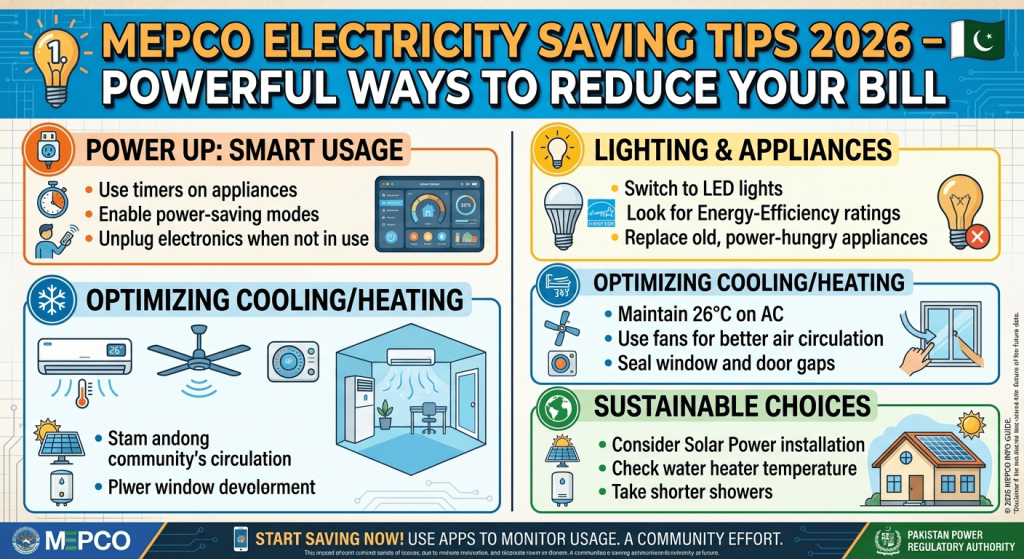
Whether you live in Multan, Bahawalpur, Dera Ghazi Khan, Rahim Yar Khan, or another area served by the Multan Electric Power Company (MEPCO), using electricity efficiently can make a difference. You do not always need expensive equipment to save energy. Simple habits, better appliance choices, and regular electricity monitoring can help reduce consumption.
In this guide, you will discover useful electricity-saving methods, learn which appliances consume more power, and understand how to monitor your monthly electricity usage.
To check your latest electricity charges and units, visit our MEPCO Online Bill website.
Why Are MEPCO Electricity Saving Tips 2026 Important?
Electricity expenses depend on several factors, including the number of units consumed, applicable tariff rates, taxes, and other adjustments. When household consumption increases, the electricity bill may also rise.
Following energy-saving practices can help you:
- Reduce unnecessary electricity consumption.
- Manage monthly household expenses.
- Avoid wasting electricity when appliances are not being used.
- Improve the efficiency of household appliances.
- Develop better electricity usage habits.
- Reduce pressure on the electricity system.
Saving electricity does not mean avoiding essential appliances. It means using them efficiently and choosing practical ways to reduce waste.
1. Use Energy-Efficient LED Lights
Lighting is an easy place to start when trying to reduce electricity consumption. Traditional incandescent bulbs use considerably more electricity than LED alternatives for similar light output.
Consider these tips:
- Replace old incandescent bulbs with suitable LED lights.
- Turn off lights when leaving an empty room.
- Use natural daylight during the daytime.
- Choose appropriate brightness instead of unnecessarily powerful bulbs.
- Keep light fixtures clean to maintain good illumination.
LED lights generally use less electricity and have a longer operating life than traditional incandescent bulbs.
2. Reduce Air Conditioner Electricity Consumption
Air conditioners can consume a significant amount of electricity, particularly during hot weather. Using them efficiently can help control household energy consumption.
Try the following methods:
- Set the temperature to a comfortable level rather than choosing an extremely low setting.
- Clean or replace air filters regularly.
- Keep doors and windows closed while the AC is running.
- Use curtains or blinds to reduce direct sunlight.
- Select an energy-efficient inverter AC when purchasing a new unit.
- Switch off the AC when cooling is no longer needed.
A temperature setting around 26°C is a commonly recommended energy-saving starting point, although comfort and room conditions vary.
3. Use Fans Efficiently
Fans generally consume less electricity than air conditioners and can help improve air circulation.
Follow these practical suggestions:
- Switch off fans when nobody is in the room.
- Clean fan blades regularly.
- Use suitable fan speeds instead of keeping every fan at maximum speed.
- Choose energy-efficient models when replacing old fans.
- Use ceiling fans to improve air circulation alongside an air conditioner.
Remember that fans cool people mainly by moving air across the skin. They do not actually lower the temperature of an empty room.
4. Choose Energy-Efficient Refrigerators
Refrigerators operate throughout the day, so their efficiency can influence your electricity consumption.
Use these simple techniques:
- Avoid opening the refrigerator door unnecessarily.
- Check the door seal for air leakage.
- Keep the refrigerator away from direct sunlight and heat sources.
- Allow hot food to cool before placing it inside.
- Maintain suitable temperature settings.
- Avoid overloading the refrigerator with items that block air circulation.
If you are purchasing a new refrigerator, compare its energy-efficiency rating and estimated electricity consumption before making a decision.
5. Switch Off Unnecessary Electrical Appliances
Many households leave appliances switched on even when they are not required. This can contribute to unnecessary electricity use.
Make a habit of switching off:
- Lights in unused rooms.
- Fans in empty spaces.
- Televisions when nobody is watching.
- Computers after work.
- Chargers when they are no longer needed.
- Other appliances that remain in standby mode unnecessarily.
Some electronic devices continue consuming small amounts of electricity while in standby mode. Unplugging suitable devices or using a switched power strip can help reduce this consumption.
Do not disconnect appliances that require continuous operation, such as essential medical equipment or refrigerators.
6. Use Washing Machines Efficiently
Washing machines can consume electricity and water during regular household use. Using them efficiently can help manage both resources.
Consider these suggestions:
- Wash clothes with a full but manufacturer-approved load.
- Select an appropriate wash cycle.
- Avoid unnecessary hot-water washing.
- Use energy-saving modes when suitable.
- Clean the machine according to manufacturer instructions.
- Air-dry clothes when weather conditions allow.
Small changes in laundry habits can reduce unnecessary appliance usage over time.
7. Monitor Your Electricity Consumption Regularly
One of the most useful MEPCO Electricity Saving Tips 2026 is to monitor your electricity usage instead of waiting until the monthly bill arrives.
Check your meter readings regularly and compare them with your previous consumption.
For example:
| Billing period | Units consumed |
|---|---|
| Previous month | 280 units |
| Current month | 240 units |
| Units reduced | 40 units |
This is an illustrative example. Your actual savings depend on your tariff, consumption pattern, and applicable bill components.
Regular monitoring can help you identify unusual increases and understand which household habits may be responsible.
8. Use Solar Energy Where Practical
Solar energy can be another option for households looking to manage long-term electricity expenses.
Before installing a solar system, consider:
- Your average monthly electricity consumption.
- Available rooftop space.
- Installation and maintenance costs.
- Inverter and panel quality.
- Applicable electricity connection and net-metering regulations.
- The expected payback period.
Solar installation is a significant investment, so compare quotations and consult qualified professionals before making a decision.
Do not assume that installing solar panels automatically eliminates every electricity bill charge. Fixed charges, applicable taxes, and current regulations may still affect the bill.
9. Avoid Using High-Power Appliances Unnecessarily
Some household appliances require considerably more electricity than others. High-power appliances can increase consumption, particularly when used for long periods.
Examples include:
- Electric water heaters.
- Electric ovens.
- Electric heaters.
- Air conditioners.
- Electric irons.
- Water pumps.
Use these appliances only when necessary and follow the manufacturer’s instructions. For example, avoid leaving an electric iron switched on between ironing sessions.
Choosing an appropriately sized and energy-efficient appliance can also help control electricity usage.
10. Check Your MEPCO Bill Every Month
Regularly checking your electricity bill helps you understand your monthly consumption and identify unusual changes.
Your bill generally provides useful information such as:
- Previous meter reading.
- Current meter reading.
- Units consumed.
- Billing month.
- Applicable tariff details.
- Taxes and other charges.
- Total amount payable.
- Due date.
You can check your latest electricity bill through the MEPCO online bill checking website.
For an official duplicate bill, you can also visit the PITC MEPCO Bill Portal.
How to Calculate Your Electricity Consumption
Understanding electricity consumption can help you identify appliances that use more power.
A basic formula is:
Electricity Consumption (kWh) = Appliance Power (kW) × Usage Time (Hours)
For example, if a 100-watt fan operates for 10 hours:
- Appliance power: 100 watts.
- Converted power: 0.1 kW.
- Daily usage: 10 hours.
- Electricity consumption: 1 kWh or 1 unit.
This means the fan consumes approximately one electricity unit during those 10 hours, assuming it operates continuously at the stated power.
Actual appliance consumption can vary depending on operating conditions and power settings.
Common Electricity-Saving Mistakes to Avoid
Some habits can increase electricity consumption even when consumers are trying to save money.
Avoid these common mistakes:
- Running air conditioners with doors and windows open.
- Leaving lights and fans switched on in empty rooms.
- Ignoring refrigerator door-seal problems.
- Using old, inefficient appliances unnecessarily.
- Running washing machines with very small loads.
- Ignoring unusual increases in meter readings.
- Purchasing appliances without checking energy efficiency.
Correcting these habits can make your electricity usage more efficient.
Frequently Asked Questions
1. How can I reduce my MEPCO electricity bill in 2026?
You can reduce unnecessary electricity consumption by using LED lights, efficient appliances, air conditioners at suitable temperatures, and switching off unused devices. Regularly monitor your electricity units to understand your consumption.
2. Which household appliances consume more electricity?
Air conditioners, electric heaters, water heaters, electric ovens, and some water pumps can consume substantial electricity. Actual usage depends on appliance power and operating time.
3. Does switching off fans and lights save electricity?
Yes. Switching off unnecessary lights and fans reduces electricity consumption because appliances are no longer operating when they are not needed.
4. Can LED bulbs help reduce electricity bills?
Yes. LED bulbs generally use less electricity than traditional incandescent bulbs while providing comparable lighting. Replacing frequently used traditional bulbs with LEDs can help reduce consumption.
5. How can I check my MEPCO electricity units?
You can review your current and previous meter readings on your electricity bill. You can also use the MEPCO online bill website to view your latest bill.
6. Does solar energy reduce MEPCO electricity expenses?
Solar energy can reduce electricity drawn from the grid, depending on system size, household consumption, and applicable regulations. However, some fixed or other charges may still apply.
7. Why is my MEPCO bill increasing even when I use fewer units?
The total bill can be affected by tariff changes, taxes, fuel price adjustments, previous balances, and other applicable charges. Compare the billing details and units before determining the reason for an increase.
Conclusion
Following MEPCO Electricity Saving Tips 2026 can help households manage electricity consumption and reduce unnecessary energy waste. Simple practices such as using LED lights, maintaining appliances, operating air conditioners efficiently, and switching off unused devices can make a difference over time.
You should also monitor your monthly meter readings and review your electricity bill regularly. Understanding your consumption helps you identify unusual increases and make better decisions about household energy use.
For convenient electricity bill checking, visit MEPCO Online Bill and review your latest units, charges, and payment details.